
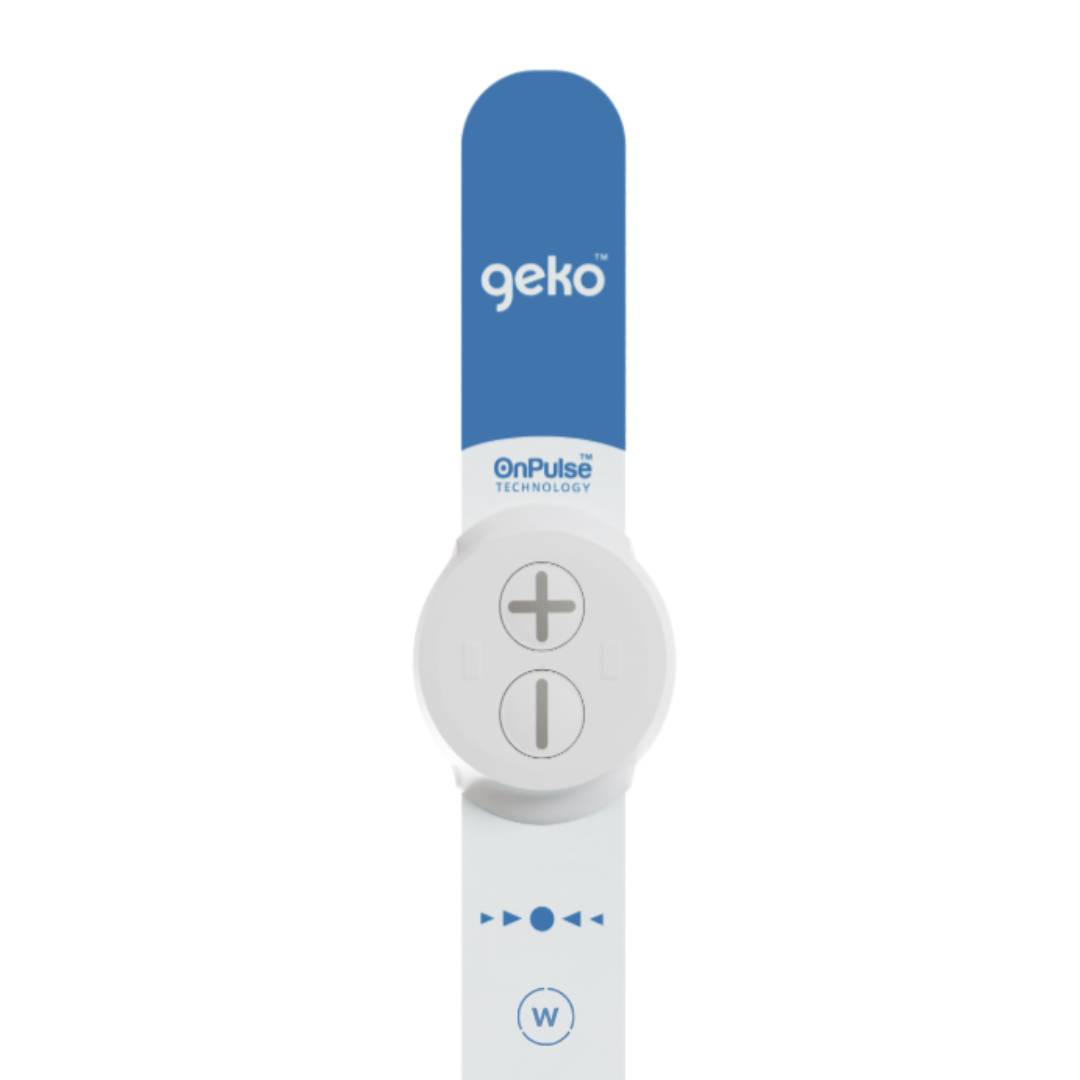


geko™ W3 Wound Therapy Device — Heal Chronic Leg Wounds
- Regular price
- $0.00
- Regular price
-
- Sale price
- $0.00
- Unit price
- per
Couldn't load pickup availability


Heal Chronic Leg Wounds, Venous Leg Ulcers & Diabetic Foot Wounds — When Standard Care Has Stalled
If a leg wound, venous leg ulcer or diabetic foot wound is not healing, the underlying cause is often poor blood circulation reaching the lower limb. The geko™ W3 is a small, self-adhesive wearable device — applied behind the knee — that gently stimulates the body's natural calf and foot muscle pump to restore blood flow to the wound site. Clinically proven to more than double healing rates of chronic leg ulcers, used by wound care clinicians across New Zealand.
- Clinically proven for venous leg ulcers, Mixed Aetiology Leg Ulcers arterial lower limb wounds, diabetic foot wounds and oedema
- Increases lower-limb blood flow via calf/foot pump activation
- Used alongside (below the knee compression) or without compression
- Mimics up to 60% of walking's calf-pump effect without raising Heart rate or Blood pressure
- +225% wound-bed microcirculation and +67% in surrounding skin
- Up to 100% increase Venous Flow, 75% increase Arterial Flow, 400+% increase Microcirculatory flux
- 44% of chronic non-healing ulcers fully healed
- >2× faster healing of venous leg ulcers (added to standard care)
When a Leg Wound Won't Heal: Considering the geko™ W3
The geko™ W3 is an adjunctive wound healing therapy — used alongside standard care to address the poor circulation, lower limb oedema, and inactive muscle pump that cause leg wounds to stall.
It is most often introduced when a chronic leg ulcer, diabetic foot wound, or non-healing lower limb wound is not progressing with standard wound care alone — or when a patient cannot tolerate compression therapy.
- A wound has healed less than 30% in 4 weeks of care
- Patient has a fixed ankle joint or poor ankle flexion
- Lower limb muscle pumps are impaired or inactive
- Oedema management has been a factor in wound healing
- Wound, ischaemia and oedema may be the underlying cause of pain
- Patient has an increased risk of Venous Thromboembolism
- Compression cannot be tolerated or is contraindicated — geko™ has been shown to enable patients to tolerate compression who have not tolerated it before
Apply Behind the Knee
Apply the device to the common peroneal nerve by the knee.
Nerve Stimulation Begins
Gentle electrical impulses activate the calf and foot muscle pump — mimicking the circulatory effect of walking, even in immobile patients.
Blood Flow Reaches the Wound
Increased microcirculatory flow delivers oxygen and nutrients to the wound bed, reducing oedema and creating the conditions needed for healing.
Leg Wounds & Lower Limb Conditions Treated by the geko™ W3
Chronic Venous Leg Ulcers
Venous leg ulcers are the most common chronic leg wound, caused by poor venous return and persistent lower limb oedema. The geko™ W3 increases venous flow by up to 100% and reduces fluid build-up — creating the circulatory conditions a leg ulcer needs to close, including in patients where compression therapy alone has not been enough.
Diabetic Foot Wounds & Diabetic Leg Ulcers
Diabetic foot ulcers and lower limb wounds in diabetic patients heal slowly because of damaged microvasculature and reduced peripheral circulation. The geko™ W3 boosts microcirculatory flux by over 400% and arterial flow by up to 75%, delivering oxygen-rich blood directly to the diabetic wound bed.
Lower Limb Oedema & Swollen Legs
Persistent lower limb oedema is a leading reason leg wounds will not heal — fluid in the tissue compresses the capillaries supplying the wound. By activating the calf and foot muscle pump from behind the knee, geko™ reduces oedema naturally, including in patients who cannot tolerate compression stockings.
Chronic & Non-Healing Leg Wounds
When a leg wound shows little or no healing progress over four weeks of active care, it is classed as chronic or non-healing. The geko™ W3 is a globally used adjunctive therapy that restores the lower limb blood flow these wounds need to begin healing again — including mixed aetiology leg ulcers and arterial wounds.
Patient Suitability
Who Should Use the geko™ W3?
The geko™ W3 is a clinically-prescribed adjunctive therapy intended for patients with lower limb wounds that have not responded adequately to standard care. If patients are interested in purchasing geko™, OneUp will work with them alongside their district wound nurse to apply, manage, and confirm that the product is appropriate.
The device is appropriate when a wound has shown less than 30% healing progress after at least four weeks of active treatment, or where patient factors — such as poor ankle mobility, impaired muscle pump function, or inability to tolerate compression — are contributing to delayed healing.
It is suitable for use in venous leg ulcers, mixed aetiology leg ulcers, arterial lower limb wounds, diabetic foot wounds, and chronic lower limb oedema.
Treatment Pathway
What Does Treatment Look Like?
- We recommend starting with a four-week treatment pack. Our team will guide fitting either in person or virtually, ensuring correct placement over the common peroneal nerve.
- Your patient continues treatment at home on a 12 hours on, 12 hours off daily protocol, working alongside their local district wound care nurse for ongoing wound assessment.
- At the end of four weeks, we review progress together. If the wound is responding well, a further treatment pack may be recommended to continue the healing trajectory.
- We remain available throughout treatment to support both the clinician and patient with any questions, adjustments, or documentation needed.
What Happens After You Order?
Once an order or enquiry is confirmed, we will send through a short clinical questionnaire to gather the relevant patient information — wound history, current care plan, and any contraindications. Based on your responses, we will prepare and send the appropriate treatment documentation, fitting guidance, and supply schedule to ensure treatment starts correctly and safely.
Request a Quote, Clinical Details or Fitting
Not sure if the geko™ W3 is right for your patient or situation? Our team can advise on suitability, provide clinical documentation, and arrange supply across New Zealand.
We can supply to wound care clinics, Hospitals, Clinicians and direct to patients across New Zealand.
