



geko™ T3 Neuromuscular Electrostimulation - VTE Prophylaxis & Oedema Management Device
- Regular price
- $0.00
- Regular price
-
- Sale price
- $0.00
- Unit price
- per
Couldn't load pickup availability
Better blood flow, anytime, anywhere.
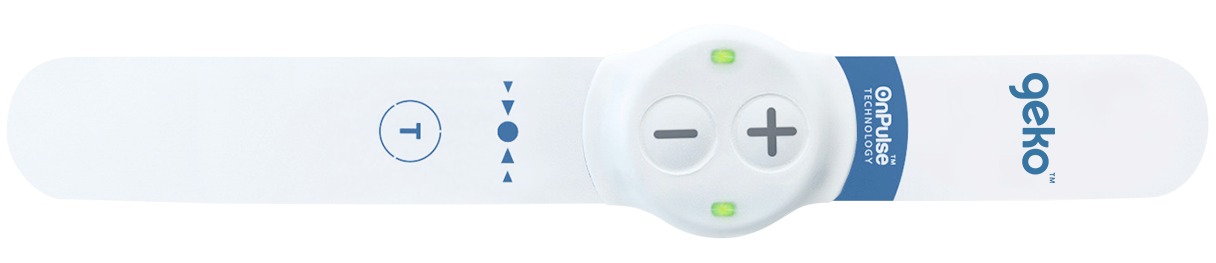
The geko™ T3 is a small, wearable device worn just below the knee. It gently activates your calf and foot muscle pumps to boost circulation, supporting injury recovery, reducing swelling and keeping blood moving even while you sit.
How it works
Circulation support you can wear
The geko™ T3 uses gentle OnPulse™ neuromuscular stimulation to activate the nerve behind the knee. That switches on your calf and foot muscle pumps, the body's natural way of pushing blood back up the legs. It mimics the effect of walking while you rest, recover, travel or sit.
Simple to use, effective in minutes
Peel and place
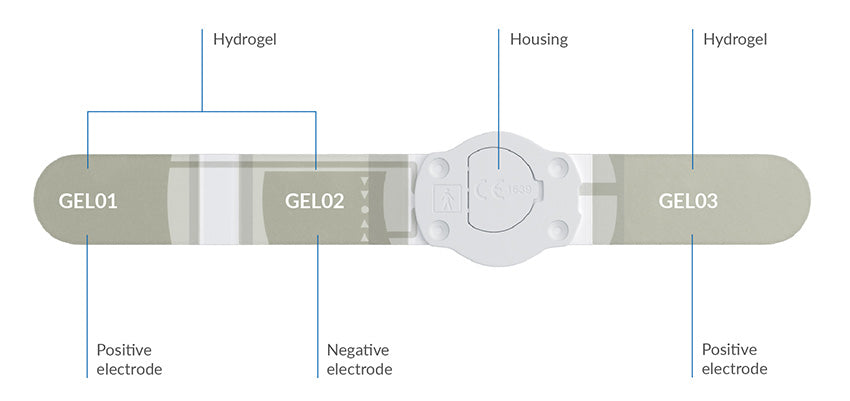
Position the self-adhesive device just below the knee. No cords, gels or bulky gear, and it sits discreetly under clothing.
Switch it on
Painless pulses activate the calf and foot muscle pumps, mimicking the circulatory effect of walking, even while you stay still.
Blood keeps moving
Increased blood flow delivers oxygen and nutrients around the lower limb, helps clear excess fluid and keeps circulation healthy.
Features & Benefits
Ultra-lightweight
Weighing just 10 g, it's incredibly small, light and comfortable to wear. Easily fits into your daily routine.
Enhanced blood flow
Activates the calf and foot muscle pumps to increase blood flow in the deep veins of the lower limb, mimicking the circulatory effect of walking.
Versatile settings
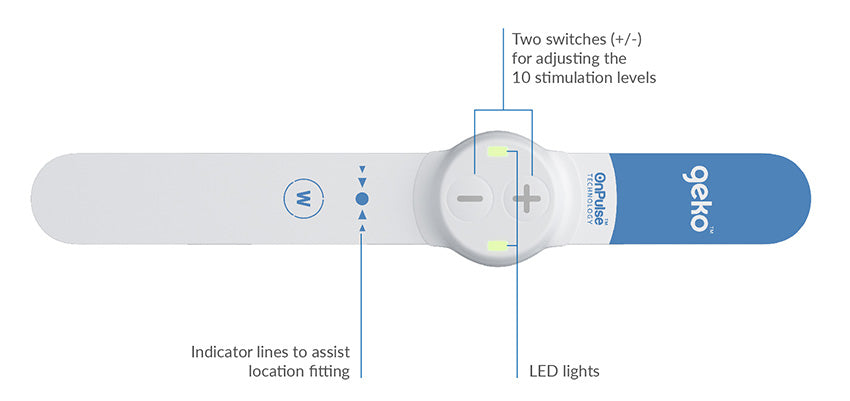
Adjustable stimulation settings cater to varying responses, helping ensure effective, comfortable treatment for everyone.
Painless stimulation
Delivers gentle, painless muscle contractions roughly once a second, promoting circulation without any discomfort.
Wire-free mobility
A completely wire-free design removes tripping hazards and lets you stay mobile and active while you wear it.
Drug-free & natural
Works with your body's own muscle pumps to boost circulation, with no medication and no side effects from the device itself.
One device, many everyday uses
From bouncing back after an injury to staying comfortable on a long-haul flight, the geko™ T3 helps wherever healthy circulation matters.
Injury recovery
After a strain, sprain or lower-limb injury, good circulation is key to recovery. The geko™ T3 increases blood flow to the affected area, delivering the oxygen and nutrients tissue needs to repair, while helping to clear the swelling that often follows an injury, so you can feel comfortable and get moving again.
Travel and long periods of sitting
Hours in a plane seat, car or at a desk slow the blood flow in your legs and leave them heavy and tired. Worn while you sit, the geko™ T3 gently activates your calf muscles like a natural walk, keeping circulation moving so you arrive feeling fresh, not stiff.
Improving circulation
Whether you're recovering, less mobile, or simply want to support healthy legs, the geko™ T3 boosts blood flow in the lower limb without raising your heart rate or blood pressure. It's an easy, drug-free way to keep circulation active throughout the day.
Reducing swelling (oedema)
Oedema is a build-up of fluid that leaves legs, ankles and feet swollen and uncomfortable. By switching on the calf and foot muscle pumps, the geko™ T3 helps move that trapped fluid out of the tissue and back into circulation, naturally reducing swelling, even for people who can't tolerate compression stockings.
VTE prophylaxis after surgery
Periods of immobility, such as after surgery, slow the blood in the deep veins of the legs and raise the risk of a venous thromboembolism (VTE), or blood clot. The geko™ T3 keeps blood flowing in the calf when you can't move much, supporting circulation during the periods when that risk is highest.
See how it works
Watch how a small pulse behind the knee sets the calf and foot muscle pumps to work, moving blood and reducing fluid build-up (oedema) the way a natural walk does.
geko™ in action
More short videos on how the geko™ works and the conditions it helps.
The clinical evidence
The geko™ device has been studied in peer-reviewed research covering lower-limb blood flow, oedema after surgery, and venous thromboembolism prevention. Tap any study below to see what it measured and what it found.
How to read this section. Each study lists its design and the population it was run in, because that context matters. Studies in healthy volunteers show a physiological effect. Studies in patients show a clinical outcome. Both are useful, and they are not the same thing. Every entry links to the published source so you can read it yourself.
Venous thromboembolism (VTE) prevention
NICE Medical Technologies Guidance MTG19 · 2014
NICE guidance on the geko™ device for reducing the risk of venous thromboembolism
NICE guidance on the geko™ device for reducing the risk of venous thromboembolism
- NICE evaluated the geko™ device and published guidance in June 2014
- The guidance positions the device for people at high risk of VTE where other mechanical and pharmacological prophylaxis is impractical or contraindicated
- The mechanism — increased deep vein blood flow — is well demonstrated across multiple studies
- The independent assessment centre conducted its own systematic review and concluded there is limited direct evidence that the device prevents VTE. The link from increased blood flow to reduced clot rates is where the direct evidence is thinner.
Blood Coagulation & Fibrinolysis · 2016
Fibrinolytic effects of peroneal nerve stimulation in lower limb vascular disease
Fibrinolytic effects of peroneal nerve stimulation in lower limb vascular disease
- Examined the body's clot-breakdown response during peroneal nerve stimulation
- Supports the proposed biological pathway behind clot risk reduction
ClinicalTrials.gov · Recruiting
Randomised trial: geko™ device vs intermittent pneumatic compression after stroke
Randomised trial: geko™ device vs intermittent pneumatic compression after stroke
- Directly compares the geko™ device against current standard mechanical prophylaxis
- Designed to measure VTE occurrence, addressing the evidence gap NICE identified
- Ongoing — results not yet published.
Blood flow and circulation
International Angiology · 2016
Measurement of blood flow in the deep veins of the lower limb using the geko™ device
Measurement of blood flow in the deep veins of the lower limb using the geko™ device
- Statistically significant increases in both blood flow volume and velocity
- Measured in the gastrocnemius, peroneal and posterior tibial veins
- These are the calf veins where deep vein thrombosis most commonly begins
Bone & Joint Research · 2013
Neuromuscular electrostimulation promotes lower limb blood flow in a below-knee cast
Neuromuscular electrostimulation promotes lower limb blood flow in a below-knee cast
- Significant increase in venous blood flow in the superficial femoral vein
- Effect held both with and without a below-knee plaster cast applied
- Suggests an option for cast patients unsuited to other mechanical prophylaxis
- Healthy volunteers and a physiological endpoint — this measures blood flow, not clot rates.
Oedema and post-surgical recovery
Heliyon · 2018
Preventing oedema formation following total hip replacement surgery
Preventing oedema formation following total hip replacement surgery
- Compared the geko™ device against compression stockings (standard care)
- Better prevention of post-operative oedema build-up in the geko™ arm
- All patients reported the device as well tolerated
- A feasibility trial, designed to test whether a larger study is viable.
Phlebology · 2016
Electrostimulation and venous blood flow after total knee replacement
Electrostimulation and venous blood flow after total knee replacement
- Examined augmentation of venous blood flow following knee replacement
- Pilot scale — early-stage evidence rather than a definitive result.
A note on how this research was funded
Much of the published research on the geko™ device was funded or sponsored by the manufacturer, Firstkind Ltd. That is normal for medical device research and does not invalidate the findings, but it is worth knowing when you read them. The NICE assessment above was carried out independently. We have linked to sources rather than summarising selectively so you can judge the evidence for yourself.
geko™ T3 or geko™ W3?
Two devices, two different jobs. The T3 supports circulation, recovery and clot prevention; the W3 is designed specifically for wound care on fragile skin. Here's how to tell them apart.
geko™ T3
Circulation, recovery & prevention
- Injury recovery
- Oedema (swelling) reduction
- DVT / blood-clot prevention
- Designed for continuous use
geko™ W3
Wound therapy
- Wound care and healing support
- Designed for intermittent use
- Gentler for fragile skin
- Used alongside a wound care plan
Not sure which is right for you? Speak with your healthcare professional, or get in touch with our team.
Frequently asked questions
What is the geko™ T3 and how does it work?
The geko™ T3 is a small, wearable medical device worn just below the knee. It uses gentle OnPulse™ neuromuscular stimulation to activate the calf and foot muscle pumps, increasing blood flow in the lower limb. It mimics the circulatory effect of walking, even while you're resting or seated.
Does it hurt?
No. The stimulation is gentle. At the right setting you'll feel a light pulsing and see a small movement in your foot. You adjust it to a level that's comfortable for you.
How long do I wear it for?
The geko™ T3 is designed for continuous use. Recommended wear time depends on what you're using it for. Always follow the Instructions for Use supplied with the device, or the guidance of your healthcare professional.
Can I wear it while travelling or sitting for long periods?
Yes. Long periods of sitting slow the blood flow in your legs. Worn while you sit, the geko™ T3 keeps your circulation moving so your legs feel less heavy and tired.
What's the difference between the T3 and the W3?
The geko™ T3 supports circulation, injury recovery, oedema reduction and DVT prevention, and is designed for continuous use. The geko™ W3 is designed specifically for wound care, uses an intermittent setting and is gentler for fragile skin. See the comparison above.
What is the clinical evidence behind it?
The geko™ device has been studied in peer-reviewed research covering lower-limb blood flow, post-surgical oedema and VTE prevention, and was evaluated by NICE in the UK in 2014. You can read the studies, including their limitations, in the clinical evidence section above, or browse our full research library.
Is it safe? Are there any side effects?
The geko™ T3 is a registered medical device. As with any medical device there are some conditions where it may not be suitable. Always read the Instructions for Use, and if you have a medical condition or any concerns, speak with your healthcare professional before use.
Do I need to charge it?
No. The geko™ T3 is battery-powered and self-contained, so there are no cords or charging. It's a single-use, disposable device.
How do I order?
You can order the geko™ T3 online through this page for delivery across New Zealand. If you have questions before ordering, contact our team at sales@oneuphealthcare.co.nz.
Get the geko™ T3
Support your recovery, keep your circulation moving and reduce swelling. Order online today, delivered across New Zealand.
Order onlineThe geko™ T3 is a registered medical device intended to increase blood circulation, prevent venous thrombosis (VTE) and treat and prevent oedema. Always read the Instructions for Use. If you have a medical condition or are unsure whether the geko™ T3 is right for you, speak with your healthcare professional.
